Armenian Cuisine
Armenian cuisine is one of the oldest in the Caucasus. Written accounts of Armenian cooking stretch back to antiquity, and in 2014 lavash — the thin flatbread baked against the walls of a clay oven — was inscribed on UNESCO's list of Intangible Cultural Heritage as a symbol of Armenian identity. Armenia is Georgia's closest eastern neighbour, and the two culinary traditions have evolved side by side for millennia: shared ingredients, a shared reverence for open fire and the ritual of the table — but a character that is entirely its own.
The foundations of Armenian cooking are lamb and young beef, apricot in every form (fresh, dried, worked into sauces), pomegranate as a source of both acidity and colour, walnuts, basil, and tarragon. Chanakh cheese, brined and aged, is one of the essential dairy products. Technique matters as much as ingredients: Armenians are masters of the tonir — a clay oven sunk into the earth, the local cousin of the tandoor — in which lavash is baked, meat is roasted, and vegetables are charred. Basturma — air-dried beef cured with fenugreek and garlic — takes weeks to prepare, and the result bears no resemblance to its factory imitations.
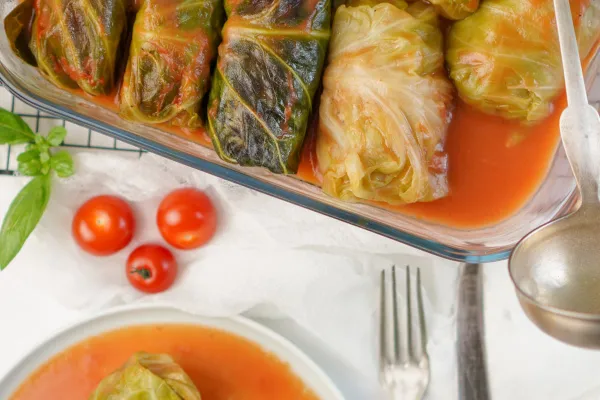
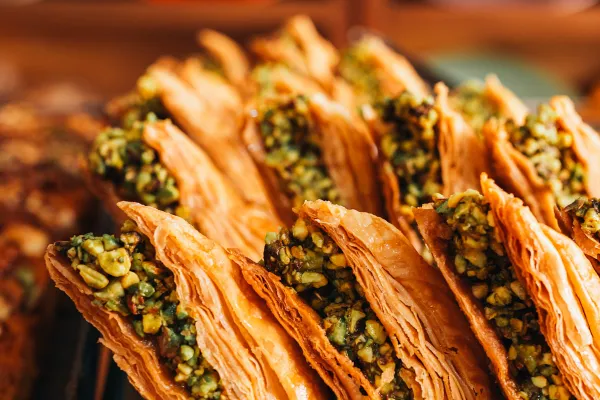
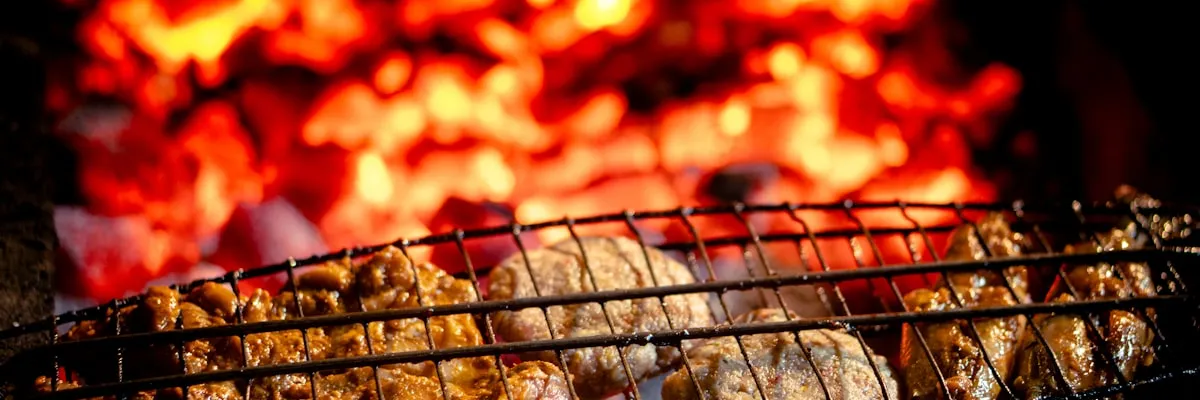
The landmark dishes of Armenian cuisine are known across the Caucasus and beyond. Khorovats — Armenian barbecue — is beef or pork, often on the bone, grilled over charcoal with minimal marinade: the meat is expected to speak for itself. Armenian dolma means, above all, vine leaves stuffed with lamb, rice, and aromatic herbs; in summer, the same filling goes into tomatoes and peppers. Kufta — balls of lamb pounded to a smooth paste and poached in broth — is a delicacy that demands patience and a practiced hand. Zhengyalov hats is lavash filled with dozens of varieties of fresh herbs, a dish that shifts from village to village and season to season. Among sweets, gata — a layered or shortcrust pastry with a buttery filling — is baked for celebrations and for ordinary days alike.
Khash is a chapter of its own. A rich broth of beef feet and tripe simmered through the night, it is eaten early on a winter morning, strictly with raw garlic, dried lavash, and a shot of vodka. Khash is not simply food; it is a ritual — a gathering of men at dawn, steam rising from the bowl. Georgia has its own version of the dish, and the friendly argument over whose khash is the "authentic" one is one of the warmest culinary disputes between two neighbouring peoples.
The Armenian community in Tbilisi has long been centred in Avlabari — the old neighbourhood on the right bank of the Kura, where Armenian churches stand alongside Georgian ones and Armenian cooking has woven itself into the fabric of the city. The shared Caucasian values — hospitality, abundance at the table, an unhurried meal that stretches through the afternoon — bring Armenian and Georgian food close in spirit, even as each recipe insists on its own independence.