Azerbaijani Cuisine
Azerbaijan sits at the crossroads of three powerful culinary worlds — the Caucasus, Iran, and Turkey — and its cuisine is a living synthesis of all three. Iranian mastery of spices meets the Caucasian love of the open grill, while the Turkic tradition of dough-work coexists with Persian sophistication in rice dishes. In 2017, dolma was inscribed on UNESCO's list of Intangible Cultural Heritage as a dish that unites the peoples of the region at a shared table. Azerbaijan also cultivates its own saffron in the Absheron district: this spice, which gives rice its golden hue and gently bitter fragrance, has become the emblem of Azerbaijani festive cooking.
The foundation of almost every Azerbaijani dish is lamb and fat-tail sheep suet. Among spices, saffron, turmeric, cinnamon, and sumac are central; for acidity — narsharab (reduced pomegranate juice), cherry plum, cornelian cherry, and sour plums. Chestnuts go into plov and meat stews; pomegranate seeds appear in both fillings and as a table garnish. The essential tools of the Azerbaijani hearth are the tandyr for flatbreads and roasted meats, the saj (a convex cast-iron griddle) for layered dishes and kebabs, and the ubiquitous charcoal grill that anchors every outdoor feast.
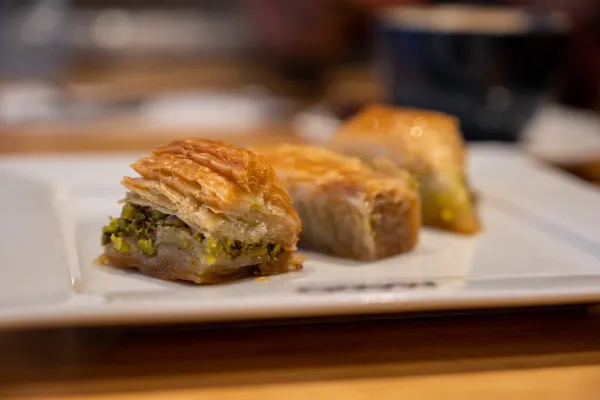
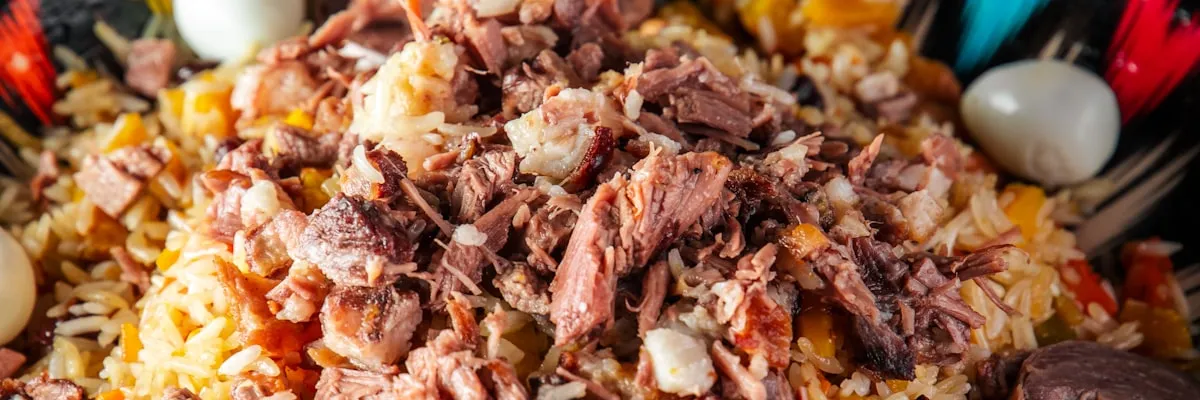
The centrepiece of Azerbaijani cuisine is plov — not a side dish but a standalone, often ceremonial preparation. The tradition counts more than 40 varieties: shah plov is baked inside a crust of dough called kazmag; sabzi plov, with herbs and dried fruits, is traditionally served at Novruz. Lula kebab — minced lamb moulded around flat skewers and grilled over coals — is another essential. Dolma here comes in vine leaves, cabbage leaves, peppers, tomatoes, and in winter, quinces. Kutaby are thin, pan-fried pastry half-moons filled with meat, pumpkin, or greens, eaten hot and dusted with sumac. Piti — a lamb soup with chickpeas and cherry plum, slow-cooked in individual clay pots — belongs above all to the city of Sheki. Among sweets: Baku pakhlava with walnuts and saffron, and Sheki halva made from rice flour with a nut-and-spice filling — both are quite unlike their Turkish or Greek namesakes.
The tea ceremony in Azerbaijan is not a special occasion but the daily foundation of conversation. Tea is brewed strong and drunk from pear-shaped glasses called armuds, with lump sugar on the side, rose-petal or fig jam, and always something sweet. Novruz — Azerbaijan's solar new year — brings shekerbura (almond-filled pastry crescents), pakhlava, and spiced gogal to the table. Plov at Novruz is practically obligatory: a celebration without it is considered incomplete.
Azerbaijan is Georgia's immediate neighbour to the south-east, and both cuisines reflect a shared Caucasian code: hospitality, an abundant table, and meat over open fire. Dolma, piti, and the tandyr tradition all rhyme with Georgian cooking — though the accents differ: where a Georgian reaches for walnut paste and adjika, an Azerbaijani adds saffron and narsharab. These are neighbouring cuisines that are nothing alike and yet understand each other perfectly.