Chinese Cuisine
Chinese cuisine is one of the three great culinary civilisations, shaped over more than 5,000 years of unbroken history. Its architecture rests on the 八大菜系 — the "eight great culinary schools": Cantonese, Sichuan, Shandong, Jiangsu, Zhejiang, Fujian, Hunan and Anhui. Each school is a world in itself: Cantonese cooking prizes freshness and delicacy; Sichuan cuisine is built around fiery chilli and the numbing tingle of Sichuan pepper; Shandong is celebrated for deep, bone-based broths and mastery of seafood.
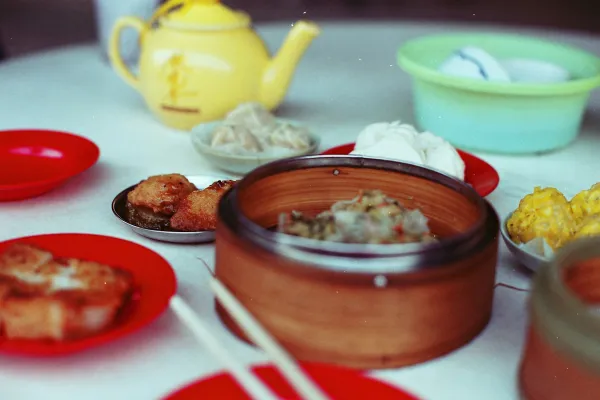
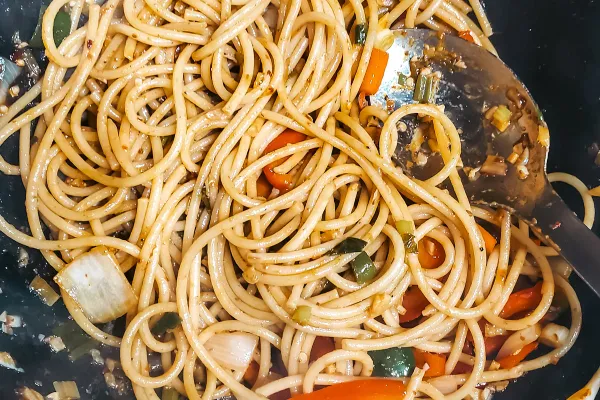
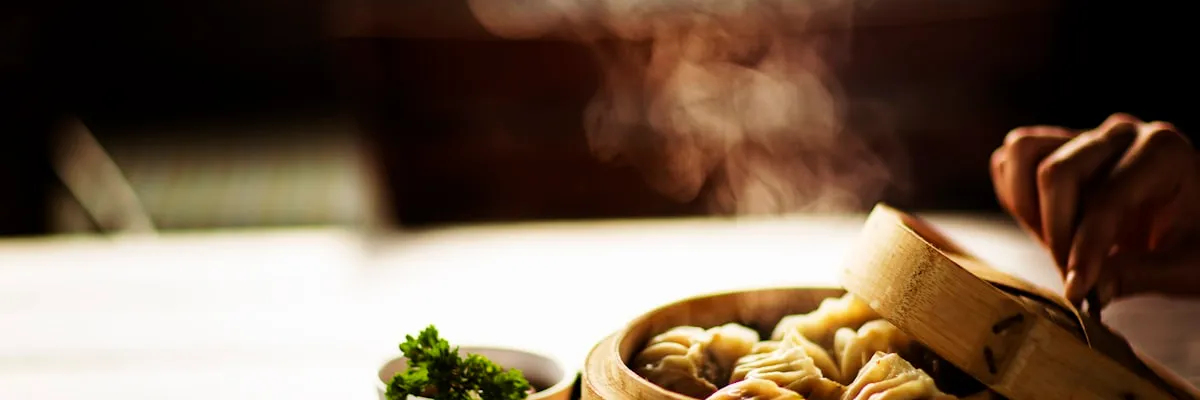
The foundation of Chinese cooking is the aromatic triad of ginger, garlic and scallion, supported by soy sauce, rice vinegar, sesame oil and star anise — the spice without which red-braised pork or lacquered duck would not exist. The central tool is the wok: a carbon-steel vessel heated to well above 300°C. The stir-fry technique demands just a few minutes over maximum heat, searing the outside of each ingredient while preserving moisture within and generating the characteristic smoky fragrance known as wok hei — "breath of the wok". Alongside this sits the slow braise (hong shao) and the bamboo steamer basket, the vessel in which dim sum is born.
Among the most iconic dishes: Peking duck, its lacquered skin shatteringly crisp, served in thin pancakes with hoisin and cucumber. Mapo tofu — silken tofu in a Sichuan sauce of fermented black beans and minced pork, fragrant and fiercely hot. Kung pao chicken, tossed with peanuts and dried chilli in a sweet-savoury glaze. Xiaolongbao, Shanghai's soup dumplings: the broth is locked inside as gelatinised stock and melts only when the dumpling hits your spoon. Lanzhou hand-pulled noodles are stretched by folding dough thousands of times. Hot pot — a pot of simmering broth at the centre of the table where guests cook their own meat, vegetables and tofu — turns dinner into a shared ceremony.
Chinese culinary philosophy flows from the principle of yin and yang: every ingredient carries cooling or warming energy, and the cook's art is to maintain balance across a meal. Chopsticks carry their own etiquette — never point with them, never stand them upright in rice. Gongfu tea ceremony transforms a small pot, a handful of leaves and boiling water into a meditative ritual of precision and attention. At Lunar New Year, families gather to make jiaozi dumplings, shaped like ancient gold ingots and eaten as a symbol of prosperity.
Georgia and China share the legacy of the Silk Road, whose caravans passed through the Caucasus carrying spices, tea and culinary knowledge that shaped the flavours of entire civilisations along the route.