Georgian Cuisine
Georgian cuisine is one of the oldest and most distinctly original culinary traditions in the world. It took shape at the crossroads of Caucasian trade routes — Persian spices, Greek wine, Anatolian techniques all dissolved into something that belongs to no one else. At the heart of Georgian hospitality stands the supra, a ceremonial feast presided over by a tamada, a toastmaster. This is not merely a dinner. It is a philosophy: a stranger becomes a friend, and each toast is a speech about life, love, and the homeland. Georgian winemaking stretches back approximately 8,000 years — the clay vessel called the qvevri, used to ferment and age wine underground, was inscribed on UNESCO's Intangible Cultural Heritage list in 2013.
A handful of ingredients define what Georgian food tastes like. Walnuts are the soul of dozens of dishes — ground into bazhe sauce, cold satsivi, and the stuffings of pkhali and roasted aubergines. Tkemali, a tart sauce made from wild plum, accompanies meat the way most cultures use ketchup. Adjika, the fiery paste from Abkhazian and Megrelian tradition made from dried red peppers and garlic, bears no resemblance to anything sold in a jar at a supermarket. Khmeli suneli, coriander, tarragon, and fenugreek create an aromatic signature you cannot mistake for anything else. The two essential cheeses — sulguni (springy, layered, pleasantly salty) and Imeretian cheese (soft, milky, mild) — appear in pastry, fried on a ketsi clay skillet, or simply as they are. Bread is baked in a tone, a vertical clay oven, where flatbreads are slapped directly against the scorching inner walls.
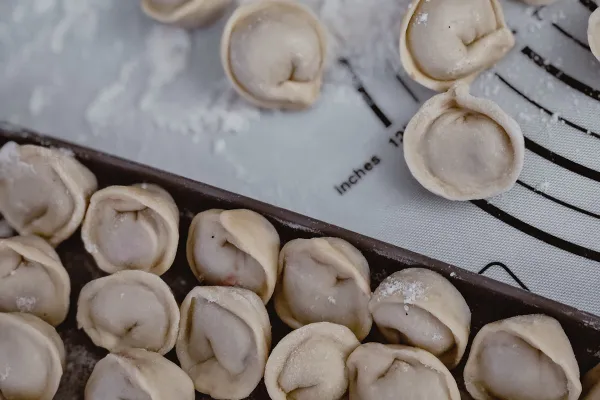
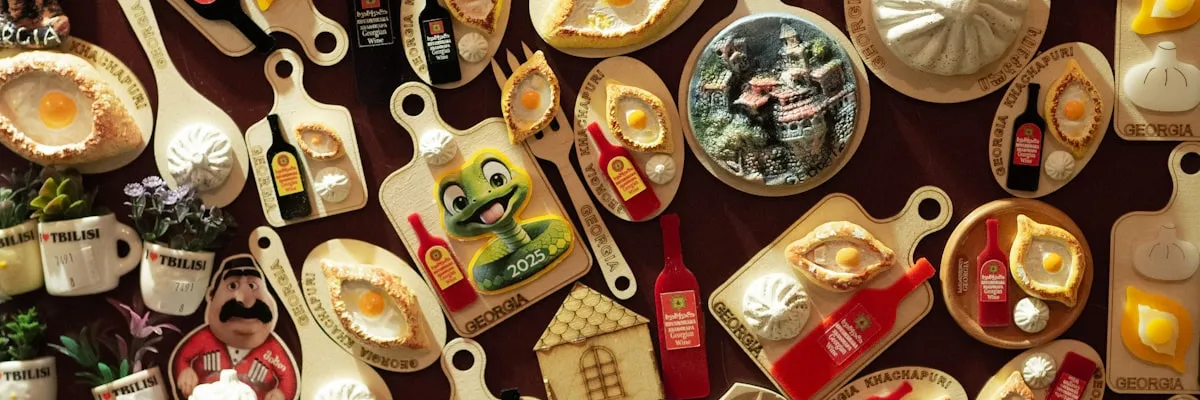
The canon of Georgian dishes has long crossed the country's borders. Khachapuri takes many forms: Adjarian is a bread boat filled with molten cheese, a cracked egg, and a slab of butter, stirred together at the table; Imeretian is a round baked pie stuffed with mild cheese; Megrelian is topped with sulguni outside as well as in. Khinkali are dumplings sealed with a thick pleated knot, hiding a small pool of spiced meat broth — you eat them by hand, pinching the knot, biting a small hole, and drinking the juice before taking a bite, never spilling a drop. Mtsivani (shashlik) is cooked over vine-wood embers with nothing but salt — no marinade needed. Satsivi is cold poached chicken or turkey bathed in a walnut sauce scented with saffron, garlic, and spices, served at room temperature. Chakapuli, a spring lamb stew with tarragon and tkemali, is the dish Georgians most look forward to at Easter. Lobio, pkhali, ajapsandali, kharcho, and churchkhela — walnuts threaded on a string and dipped in thickened grape juice until set — round out a table where vegetable dishes carry as much honour as meat.
Georgia's regional diversity is vast. Kakheti is the country of amber qvevri wine and richly spiced meat. Imereti is restrained, built around fresh cheese and bread. Samegrelo is the spiciest region: adjika goes into everything and sulguni is smoked over embers. Adjara gave the world Adjarian khachapuri and carries visible Turkish influence in its cooking. These differences are not marketing — they are a living geography of flavour, where every district has its own way of setting the table, its own yeast for churchkhela, and its own temperature of welcome.
Georgian cuisine is living through a new wave of international recognition. Tbilisi's restaurant scene draws chefs from around the world, qvevri wine has become a benchmark for natural winemaking, and khinkali and khachapuri are now made from Berlin to Tokyo. But beyond the trends, the essential thing remains: Georgian cuisine is a conversation at a table that never ends before dawn.