German Cuisine
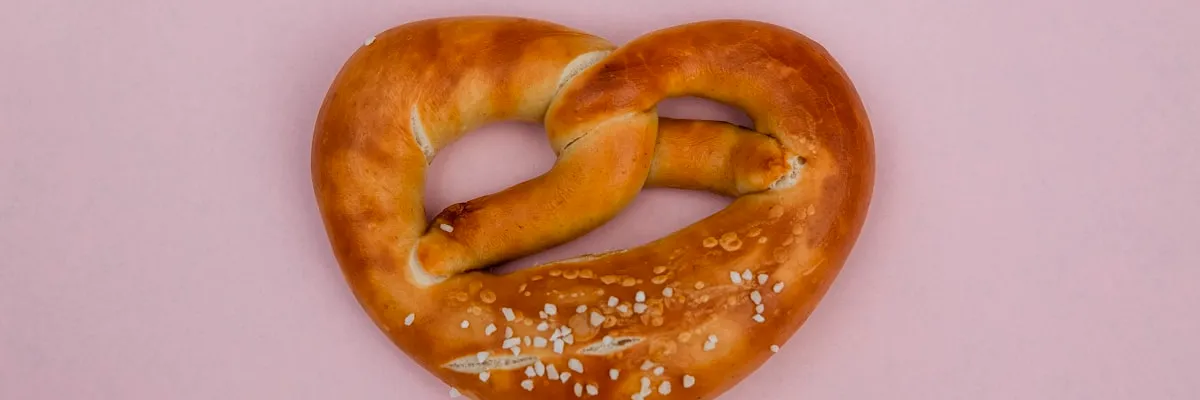
German cuisine is too easily reduced to sausages and beer — and in doing so, its real depth goes unnoticed. Germany is a federal country, and its culinary map is just as fragmented as its history: Bavaria revolves around roasted pork knuckles and pretzels, Swabia is the home of egg noodles and marzipan pastries, and the Rhineland produces sauerbraten — beef marinated in vinegar for several days before braising. What unites them is a shared philosophy: food should be hearty, grounded, and seasonal. German brewing reached the level of legislation as early as 1516, when the Reinheitsgebot — the "Purity Law" — restricted beer to just water, barley, and hops. That law remained in force in Bavaria for nearly five hundred years.
The pillars of German cooking are pork, potatoes, cabbage, and rye bread. Pork appears in every form: minced for bratwurst, as a shank for Schweinshaxe, as cured ham for Eisbein. Potatoes take dozens of forms — boiled, fried, shaped into dumplings, or dressed in vinegar for a potato salad. Sauerkraut is not a side dish but a full ingredient in its own right, fermented with caraway seeds and juniper berries. Horseradish and mustard are the default condiments. The techniques are straightforward and reliable: braising, smoking, slow oven-roasting, and extended marinating. German rye bread — Pumpernickel — bakes for several hours at low heat and keeps for weeks.
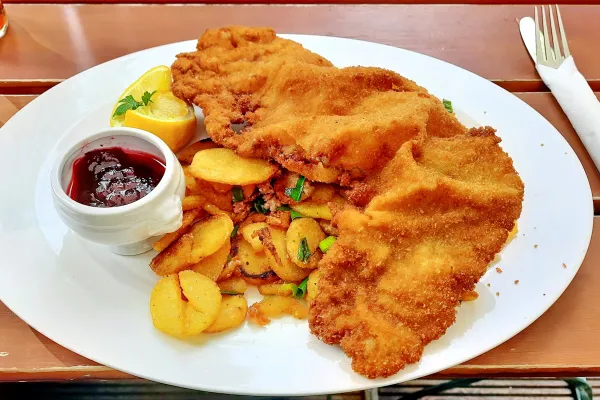
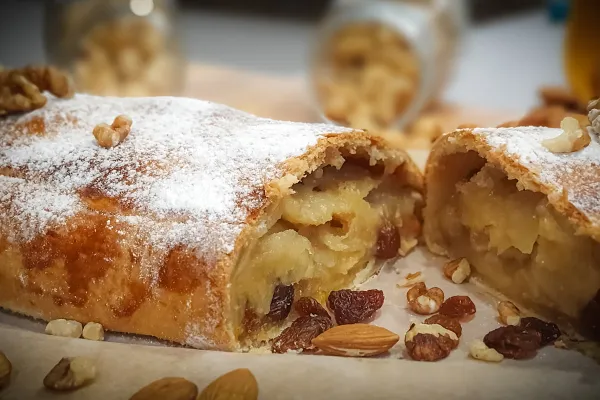
The roll call of iconic German dishes reads like a gastronomic atlas of the country. Bratwurst — a grilled pork sausage, crisp on the outside and juicy within — is tiny in Nuremberg and long in Thuringia. Wiener Schnitzel — veal pounded thin and fried in breadcrumbs to a golden crust — is made with pork in Germany and called Schweinsschnitzel. Schweinshaxe is a pork knuckle braised until tender, then roasted to crackle the skin. Sauerbraten sees beef aged in a marinade of vinegar, onion, and herbs, then braised with raisins until the sauce turns sweet-sour. Spaetzle are soft egg noodles scraped directly from a board into boiling water, then tossed in butter or melted cheese. For dessert: Black Forest cake layered with sour cherries, whipped cream, and Kirsch, or apple strudel warm from the oven with cinnamon.
German table culture follows its own rhythms. Oktoberfest in Munich — the world's largest beer festival — runs from late September and draws millions to vast Biergarten tents. The daily ritual is quieter: Kaffee und Kuchen — coffee and cake in the mid-afternoon — is Germany's equivalent of the British tea. Christmas markets across the country fill the air with Glühwein and Stollen, the dense, fruit-studded loaf laced with marzipan that bakers prepare weeks before the holiday.
The German presence in Georgia goes deeper than tourism. In the nineteenth century, Lutheran German settlers established communities in Kartli and Kakheti — Marienfeld, Katharinenfelde (today Bolnisi), Alexandersdorf. They brought agricultural skills and a tradition of brewing: the first industrial brewery in Tbilisi was founded by a German. That history still echoes in Georgian beer culture today.