Greek Cuisine
In 2010, UNESCO inscribed the Mediterranean Diet on its Intangible Cultural Heritage list — with Greece among the founding countries whose culinary tradition underpinned the nomination. That tradition reaches back nearly four thousand years. Hippocrates declared in the fifth century BC that food is the best medicine, singling out olive oil, honey, and aromatic herbs as the pillars of a healthy table. Greek cuisine follows the same logic today: honest flavours, seasonal produce, and a light hand with processing.
Everything in Greek cooking pivots around olive oil — used not only as a dressing but for sautéing, frying, and marinating. Alongside it stand feta, a brined sheep's-milk cheese with protected designation of origin, and thick Greek yogurt. The flavour palette is built from lemon, oregano, thyme, garlic, and honey. Aubergine, courgette, tomatoes, chickpeas, and seafood supply the bulk of the proteins and vegetables. Techniques are direct and unpretentious: open-grill charring, long oven roasting, and layering in filo pastry — gossamer-thin sheets that shatter into flakes after baking.
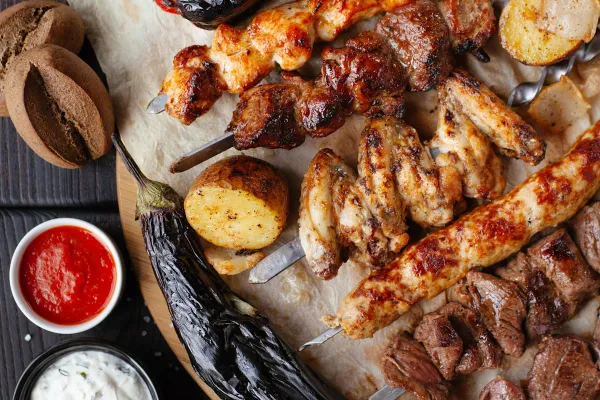
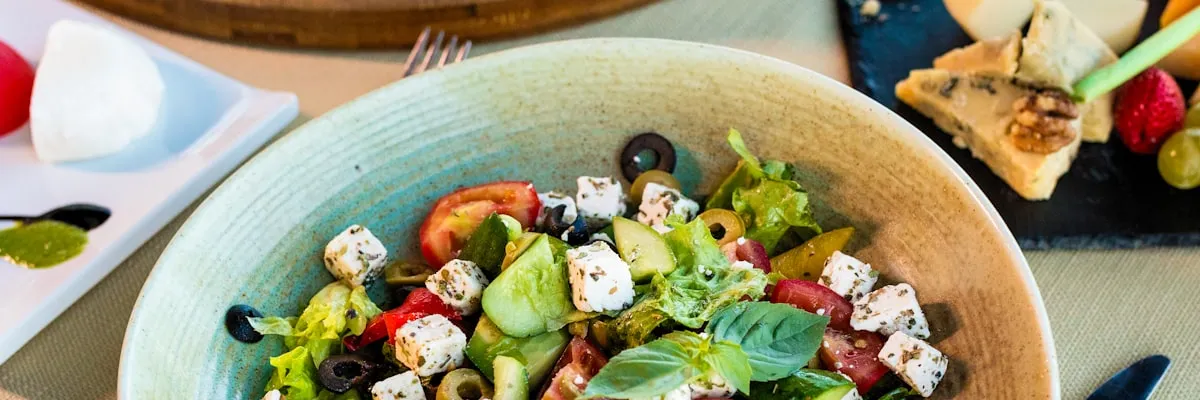
The signature dishes of Greek cuisine have become global. Moussaka — layered aubergine, spiced meat, and béchamel baked to a golden top — is the dish that defines the cuisine abroad. Souvlaki are lemon-and-oregano-marinated meat skewers grilled over charcoal. Gyros is pork or chicken slow-cooked on a vertical spit, carved into pita with tzatziki and tomatoes. Tzatziki — yogurt with grated cucumber, garlic, and dill — serves as both sauce and side dish. Spanakopita is a filo pie filled with spinach and feta. Horiatiki (the Greek salad) is tomatoes, cucumber, olives, onion, and a slab of feta — nothing more. Pastitsio is a pasta bake layered with meat sauce and béchamel. Kleftiko is lamb sealed in parchment and roasted for hours until the meat falls from the bone. For dessert: baklava of thin pastry, chopped nuts, and honey syrup, and loukoumades — honey-soaked doughnut puffs dusted with cinnamon.
The Greek table is shaped by the culture of mezze: many small dishes brought out together, accompanied by ouzo or retsina. The taverna is not merely a restaurant — it is a social institution where families linger over long Sunday lunches, argue about politics, and mark every rite of passage. The Easter table, centred on a whole lamb on the spit, is the gastronomic high point of the year. A Greek family Sunday lunch runs to three hours without effort.
Georgia and Greece are more closely connected than geography suggests. Orthodox Christianity is a shared spiritual thread, and the Greek diaspora in Georgia goes back centuries. The Pontian Greeks — communities who resettled in the South Caucasus during the nineteenth and twentieth centuries — carried their language, songs, and recipes with them and preserve them still. At the table, both traditions arrive at the same conclusion: a meal is not nourishment alone; it is a way of being together.