Indian Cuisine
Indian cuisine is one of the oldest culinary traditions on earth, with a history stretching back more than five thousand years. It is not a single cuisine but a continent of flavours: the gastronomic divide between North and South India is as wide as the one between France and Morocco. The North revolves around wheat, flatbreads — naan, chapati, paratha — clarified butter known as ghee, and rich tomato-based sauces. The South centres on rice, coconut milk, tangy tamarind-laced curries, and paper-thin crispy dosa. Then there is Bengal with its mustard-spiced fish, Kashmir with lamb in saffron sauce, and Goa bearing traces of Portuguese rule in its fiery vindaloo.
Spices are the architecture of Indian cooking, not its decoration. Turmeric gives colour and depth; cumin adds earthy warmth; coriander brings citrus brightness; cardamom lends a floral sweetness that borders on menthol. Fenugreek introduces a measured bitterness that balances richness; black mustard seeds, when they hit hot oil, release a nutty aroma entirely different from their raw state. Garam masala is not a standardised product but a family heirloom: every household keeps its own ratio of cinnamon, clove, cardamom, black pepper and nutmeg. The technique called tarka — blooming whole spices in hot ghee or oil — unlocks essential oils that would never dissolve in water.
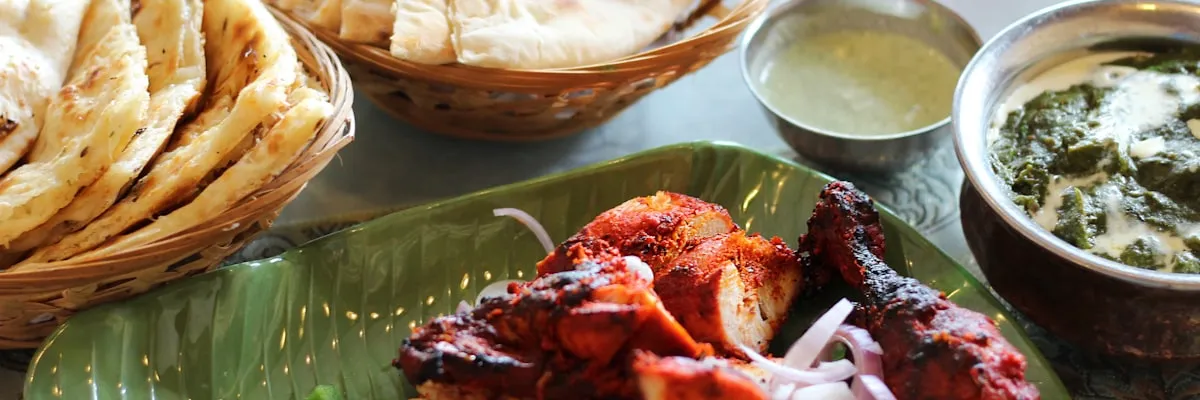
Among the defining dishes of Indian cooking: tandoori chicken, marinated in yogurt and spices then cooked at over 400°C in a cylindrical clay oven, emerging charred on the outside and juicy within. Biryani — a celebration rice dish layered with meat, saffron and caramelised onion, sealed with dough and finished over a gentle flame. Dal makhani, made from black lentils simmered overnight until silky. Palak paneer, fresh cottage cheese in a spinach sauce — an emblem of Northern vegetarian cooking. Tikka masala with its tomato-cream sauce became Indian cuisine's most recognised ambassador abroad; samosa, filled with spiced potato and peas, remains an enduring street classic from Delhi to Mumbai.
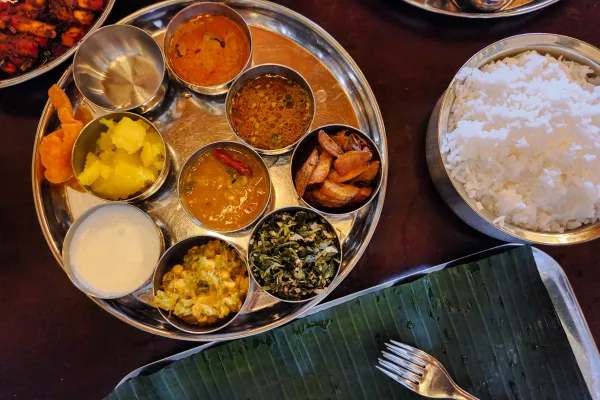
The concept of thali — a tray arranged with small portions covering all six Ayurvedic tastes: sweet, sour, salty, pungent, bitter and astringent — reflects an ancient understanding of balanced nutrition. Eating with the fingers is not informality but ritual: the hands sense temperature and texture, and physical contact with food is considered part of the meal itself. Vegetarianism in India is neither trend nor restriction — it is a profound ethical and religious tradition practised by roughly a third of the population, and Indian cuisine has spent millennia developing a vegetarian vocabulary as expressive as any meat-based kitchen.
Georgia and India share something essential: the table as an act of hospitality. Indian restaurants in Tbilisi bring that tradition to the Caucasus — tandoor-baked bread, curry built from whole spices, and a cold glass of lassi to close.