Japanese Cuisine
In 2013, UNESCO inscribed washoku — traditional Japanese cuisine — on the Representative List of the Intangible Cultural Heritage of Humanity. The recognition was grounded not in technique alone but in philosophy: the principle of seasonality, reverence for the natural form of ingredients, and the ability to build harmony among flavours without any single one overpowering the rest. Japanese cuisine functions as a living system in which the cook does not perform mastery but makes the ingredient visible.
The foundation of Japanese taste is umami — the fifth flavour, identified by chemist Kikunae Ikeda in 1908 while studying kombu seaweed. Dashi — a broth made from kombu and dried bonito flakes — underpins miso soup, ramen and countless sauces. Rice, nori, soy sauce, mirin, sake, wasabi and tofu form a stable matrix within which Japanese cooks have worked for centuries. Slicing fish for sashimi demands dedicated training: the knife moves in a single direction without pressure so as not to break the muscle fibres. For tempura, batter is mixed with ice-cold water and deliberately left lumpy — this produces a crisp, airy crust during frying with no greasy aftertaste.
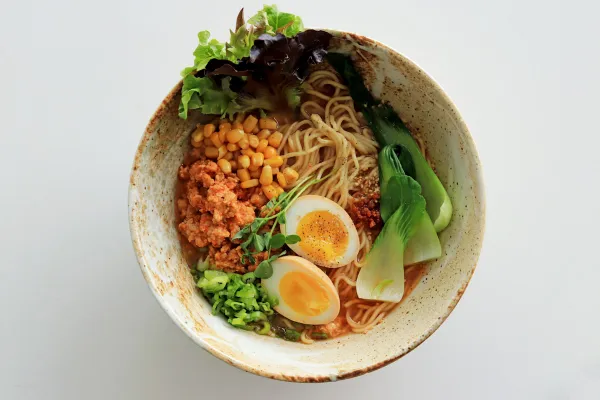
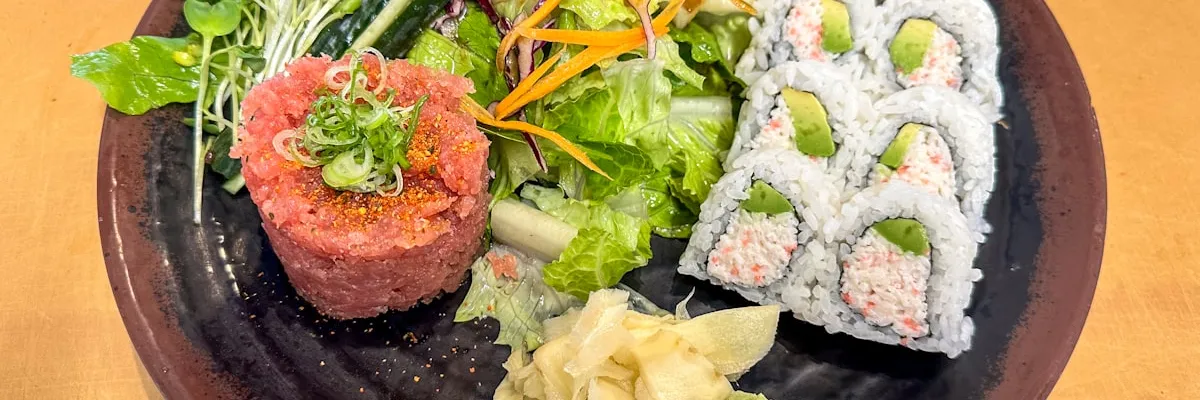
The signature dishes of Japanese cuisine span the full range from street food to ceremonial dining. Sushi and sashimi — cuts of raw fish on vinegared rice or served alone, calibrated by size and serving temperature. Ramen — wheat noodles in broth: tonkotsu made from pork bones, shoyu on a soy-sauce base, shio with sea salt, or miso. Tempura arrived in the sixteenth century under the influence of Portuguese Jesuit missionaries and became the benchmark for light deep-frying. Yakitori — pieces of chicken threaded on bamboo skewers and grilled over charcoal with tare glaze. Gyoza — steamed or pan-fried dumplings filled with pork and cabbage. Completing the picture is matcha — finely ground green tea powder used in the tea ceremony and incorporated into desserts.
Japanese presentation follows the principle of mono no aware — an awareness of the beauty of transience. Vessels are chosen to match the season, food is arranged with attention to empty space, and the colour and shape of the dish complement those of its contents. Kaiseki — the multi-course meal of Japanese haute cuisine — is built around a single seasonal ingredient shown through several preparations. Its informal counterpart is the izakaya: an evening bar where guests order small plates of many things and conversation runs alongside the meal. Before eating, the phrase itadakimasu is spoken — literally "I humbly receive" — an expression of gratitude toward nature, the cook, and all who produced the food.
Georgia and Japan are both countries with a deep culture of the table, where eating is inseparable from conversation. Japanese restaurants in Tbilisi have become part of the city's culinary life, bringing washoku's logic of seasonality and precision to guests who recognise the same values in their own food tradition.