Korean Cuisine
In 2013, UNESCO inscribed kimjang — the tradition of communal kimchi-making — on the Representative List of the Intangible Cultural Heritage of Humanity. The recognition captured something essential about Korean cuisine: food here is not merely sustenance but a social act. Korean cooking is built on the balance of five tastes — spicy, salty, sour, bitter and sweet — and five colours representing the cardinal directions. The hallyu wave, Korea's cultural export, has carried these dishes into kitchens and restaurants around the world, from Seoul to Tbilisi.
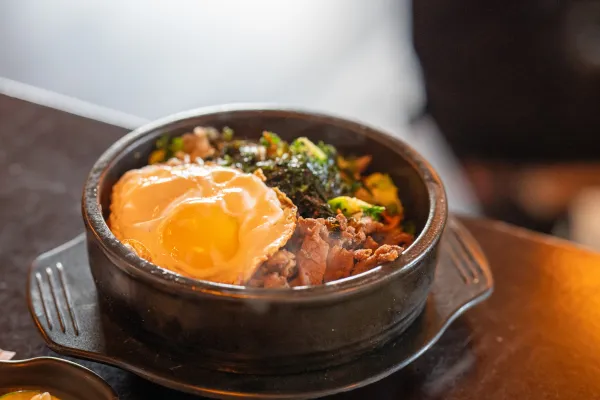
The foundation of Korean flavour is fermentation and heat. Kimchi is made through lacto-fermentation: napa cabbage or radish is coated in a paste of gochujang (red chilli paste), garlic, ginger and fish sauce, then left to ferment from a few days to several months. Alongside gochujang stands doenjang — a thick fermented soybean paste, Korea's answer to miso and the backbone of soups and marinades. Sesame oil, soy sauce, spring onion and garlic appear in almost every dish. Meat and vegetables are cooked over charcoal or in clay pots called ttukbaegi, which hold heat and bring the dish to the table still bubbling.
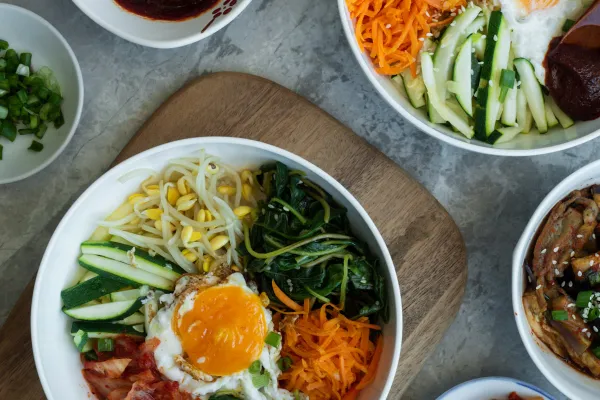
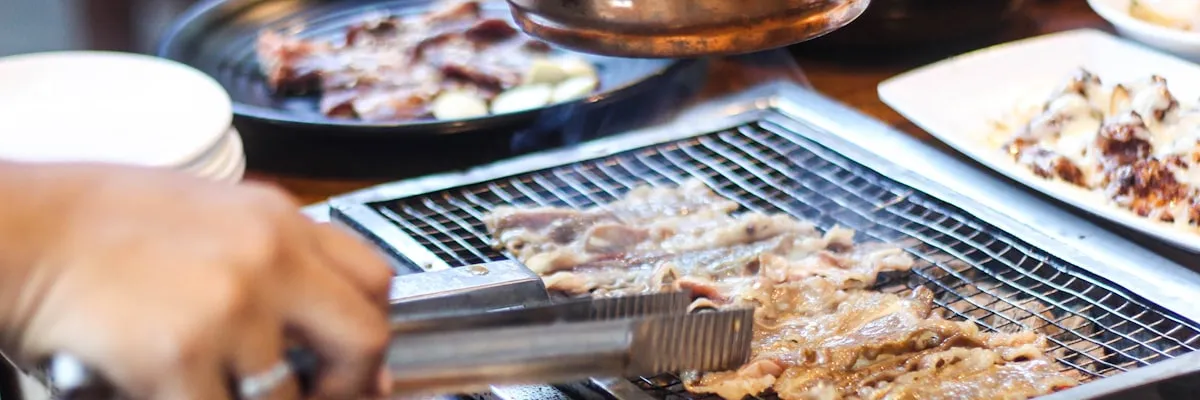
Among the defining dishes, bibimbap stands out: rice topped with seasonal vegetables, egg and beef, mixed at the table with a spoonful of gochujang. Bulgogi is thinly sliced marinated beef, grilled or pan-fried until caramelised at the edges. Samgyeopsal — thick strips of pork belly cooked over charcoal — is wrapped in lettuce leaves with garlic and dipping sauce. Tteokbokki are cylindrical rice cakes in a spicy sauce, the definitive street food of Seoul. Kimbap resembles Japanese rolls but is seasoned with sesame oil rather than rice vinegar. Sundubu-jjigae is a fiery stew built around soft tofu; japchae is glass noodles made from sweet potato starch, stir-fried with vegetables and meat; hotteok are pan-fried sweet pancakes filled with brown sugar and crushed nuts.
The Korean table is defined by banchan — a spread of small side dishes served simultaneously with the main course. There may be anywhere from four to twelve: kimchi of various kinds, pickled vegetables, pan-fried tofu, legumes. Korean barbecue — KBBQ — is less a cooking method than a ritual: guests grill the meat themselves on a built-in tabletop grill, pass pieces to one another, wrap them in lettuce and wash everything down with soju. The rice spirit soju is the world's best-selling liquor in large part because a Korean meal is unimaginable without it. The principle of hansik — literally "Korean food" — encompasses the whole: rice, soup, banchan and a hot main dish, all placed on the table at the same moment.
Georgia and Korea share a love of fermented foods, bold flavours and long communal meals — Korean cuisine finds a natural home here.