Mexican Cuisine
In 2010, UNESCO inscribed Mexican cuisine on its Intangible Cultural Heritage list — the first national cuisine in the world to receive that recognition. The honour reflected something deeper than flavour: for millennia before the Spanish arrived, the Aztecs and Maya built entire civilisations around corn. In Mesoamerican cosmology, maize was not merely food — it was the substance from which humans themselves were created. That layering of the sacred, the agricultural, and the everyday is what sets Mexican cooking apart from almost any other tradition on earth.
The technical foundation of Mexican cuisine is nixtamalization — an ancient process of soaking and cooking dried corn kernels in an alkaline lime solution. This unlocks nutrients, transforms the texture, and gives masa dough its unmistakable flavour. Tortillas made from masa are cooked on a comal, a flat clay griddle with a history stretching back three thousand years. Alongside corn, chili peppers in all their variety are indispensable: smoky chipotle, velvety ancho, fiery habanero, grassy jalapeño. Avocado, tomatillo, cilantro, lime, and cacao round out a flavour vocabulary that is ground and blended in the molcajete — a basalt mortar that passes from mother to daughter across generations.
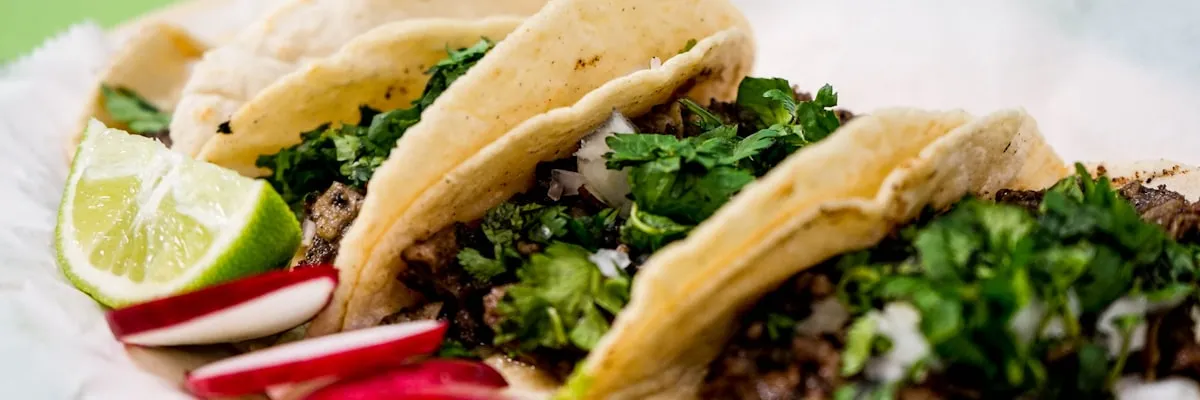
No dish captures the ambition of Mexican cooking more than mole: a sauce cooked for hours from up to thirty ingredients. Mole poblano brings together ancho, mulato, and pasilla chiles with dark chocolate, spices, and sesame; mole negro adds charred chili and raw cacao, producing a sauce almost black in colour. Tacos on soft corn tortillas with slow-braised carnitas, white onion, and cilantro are the street food of taquerías open until dawn. Tamales — masa filled with meat or chili, wrapped in corn husks and steamed — are festive food, made communally, filling the kitchen for hours. Chiles en nogada stuffs poblano peppers with a picadillo of minced meat and dried fruit, then drapes them in walnut cream sauce and scatters pomegranate seeds: white, green, red — the colours of the Mexican flag. For dessert, churros with thick, bitter drinking chocolate — nothing like the European version.
Mexican food is inseparable from ritual and social life. On Día de los Muertos, families place the favourite dishes of the departed on their ofrendas — pan de muerto, tamales, atole. Street taquerías thrive through the night: for taco al pastor, marinated pork is shaved directly from a vertical spit much like shawarma, a technique introduced by Lebanese immigrants in the 20th century. Mezcal and tequila are not interchangeable spirits but expressions of terroir: Espadin agave is slow-roasted in earthen pits, and each village in Oaxaca produces a mezcal with its own distinct character.
In Tbilisi, Mexican food has found a receptive audience — Georgians accustomed to bold sauces, flatbread, and the long table recognise something familiar in it, even if the chiles are new.