Persian Cuisine
Persian cuisine is one of the oldest living culinary traditions on earth, with roots stretching back to the Achaemenid and Sasanian empires — over 2,500 years of continuous practice. Long before the concept of "fusion" existed, Persia's position at the crossroads of trade routes made its kitchen a meeting point for spices, citrus, grains, and techniques from Central Asia, the Levant, and beyond. The cuisines of the Caucasus, the Indian subcontinent under the Mughals, and much of the Middle East carry a recognisable Persian imprint: the balance of sweet, sour, and aromatic; the mastery of slow-braised stews; the elevation of rice to an art form.
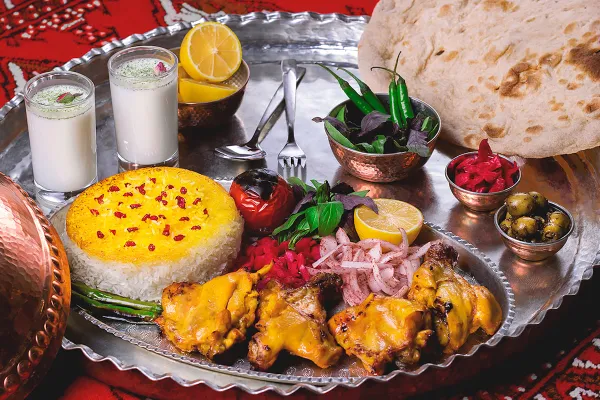
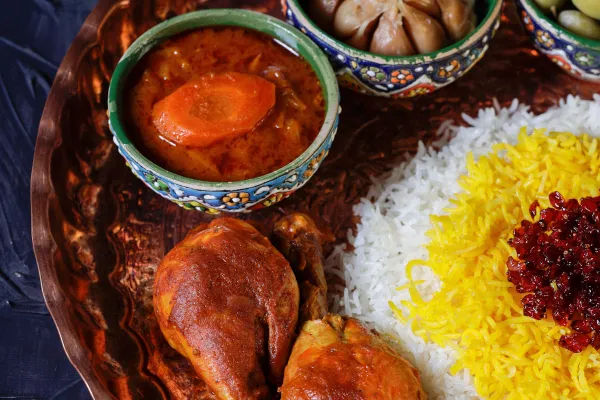
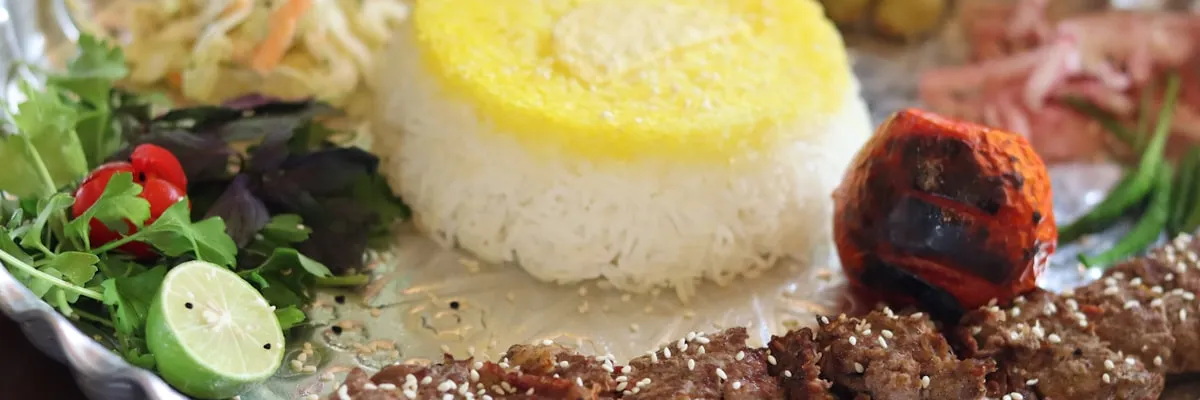
The flavour palette of Persian cooking is built on contrast and layering. Saffron — precious, almost ceremonial — colours rice a deep gold and perfumes it with an aroma found nowhere else. Barberries (zereshk), pomegranate molasses, and dried limes (limoo amani) deliver tartness and depth. Walnuts, rose water, and ghee complete the pantry. The defining technique is tahdig: the prized crispy crust that forms at the bottom of the rice pot during slow steaming. Achieving a perfect tahdig — golden, intact, and released cleanly — is a mark of a skilled cook. Alongside it sits the art of khoresh, the category of thick, slow-cooked stews built from herbs, fruit, and nuts.
Among the signature dishes: chelow kebab in its many forms — koobideh (ground lamb on a flat skewer), barg (tender beef strips), jujeh (saffron-marinated chicken). Fesenjan, a rich stew of ground walnuts and pomegranate molasses with chicken or duck, is Persian culinary philosophy in a single bowl: simultaneously sweet, sour, and bitter. Ghormeh sabzi — often called the national dish — is a long braise of dried herbs, lamb, and black limes. Tahchin is a baked saffron rice cake with chicken inside, turned out like an upside-down tart. Zereshk polo, ash reshteh (a thick noodle and legume soup), and kashk-e bademjan (fried aubergine with fermented whey) round out the repertoire. For dessert, faloodeh — rice vermicelli set in a frozen rose-water syrup, served with lime juice — is one of the world's earliest recorded frozen desserts.
Food in Iran is inseparable from poetry and ritual. Nowruz, the Persian New Year at the spring equinox, gathers families around the haft-sin table, where seven symbolic items beginning with the Persian letter "sin" represent renewal and abundance. The poets Hafez and Rumi used feasts, gardens, and wine as metaphors for spiritual longing. The social custom of taarof — elaborate, layered hospitality — means that offering food is both an obligation and an honour, and refusing it too quickly is considered impolite.
Georgia and Iran share millennia of intertwined history. During the Sasanian era and later under the Safavid shahs, Persian culture left a deep mark on Georgian life — in architecture, language, literature, and food. The Georgian tradition of using pomegranate, walnuts, and tart fruit-based sauces in cooking reflects, in part, centuries of cultural exchange with Iran. Today, Tbilisi has a notable Iranian diaspora that keeps Nowruz traditions alive, maintaining a living link to a culinary heritage that belongs to the world.