Thai Cuisine
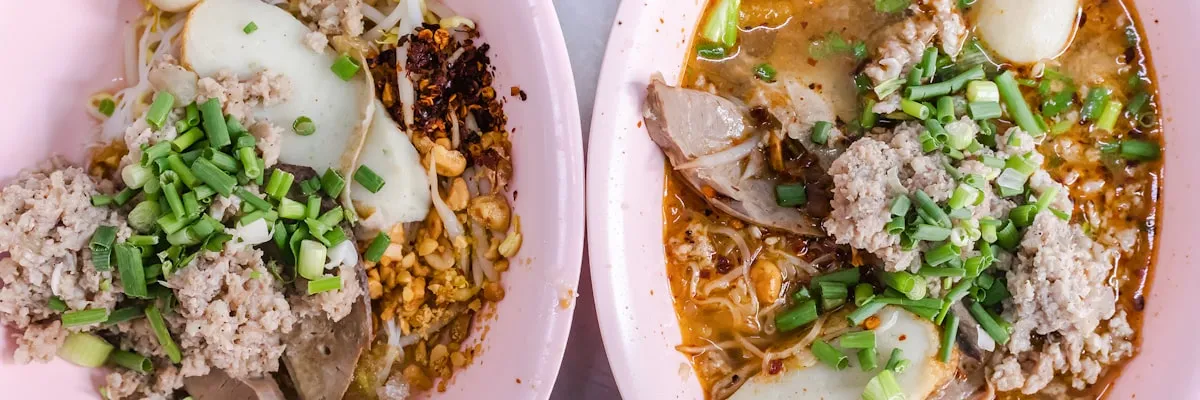
Thai cuisine is built on the pursuit of balance — hot, sour, salty, and sweet, calibrated in every dish so that no single taste overwhelms the others. This philosophy took shape over centuries: during the Ayutthaya period, Thai cooking absorbed Indian, Chinese, and Malay influences while remaining distinctly its own. Today it is among the most recognized cuisines in the world, and its street food culture — open-air markets with blazing wok burners, simmering broth pots, and heaped tropical fruit — is celebrated as an expression of living culinary heritage.
The aromatic foundation of Thai cooking rests on three pillars: lemongrass, with its bright citrus edge; galangal, a resinous root that brings sharp, peppery warmth; and kaffir lime leaves, which perfume broths and curries with an almost floral intensity. Around them gather fish sauce (nam pla) for deep umami, tamarind for sourness, coconut milk for richness and body, fresh Thai basil, bird's eye chili, and palm sugar. Curry pastes — green, red, massaman — are ground by hand in a stone mortar, a process that shapes the entire character of the dish that follows.
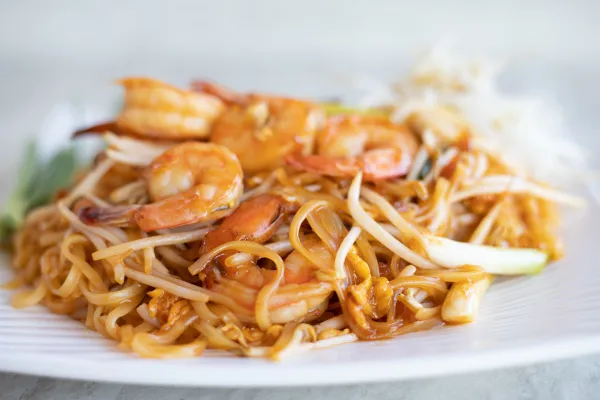
The repertoire of iconic Thai dishes is broad enough to fill a dictionary. Tom yum is a hot and sour soup layered with lemongrass, galangal, and fish sauce — every spoonful a full sensory event. Pad thai, stir-fried rice noodles with tamarind, crushed peanuts, and egg, became a national emblem from its roots on the street. Green curry with coconut milk and Thai basil is simultaneously gentle and fierce. Massaman curry, spiced with cardamom and cloves, carries the legacy of Indian traders who came through the Strait of Malacca centuries ago. Som tam — green papaya salad with chili and fish sauce — originated in the northeastern Isan region and traveled to every corner of the country. For dessert: mango with sticky rice and coconut cream, one of the most quietly perfect combinations in Asian cooking.
In Thailand, eating is a communal act. Several dishes arrive at the table together; everyone takes a little from each, using rice as the neutral thread that ties different flavors into a coherent meal. Night markets and street stalls are not just places to eat — they are the living rooms of Thai cities. Cooking is fast: a screaming-hot wok, practiced hands, and seconds to spare.
Thai food found its audience in Tbilisi earlier than most other Asian cuisines, and that audience has stayed loyal. Georgians — accustomed to bold, aromatic flavors — tend to recognize something familiar in the heat and brightness of Thai cooking, even if the logic behind it is entirely different.