Ukrainian Cuisine
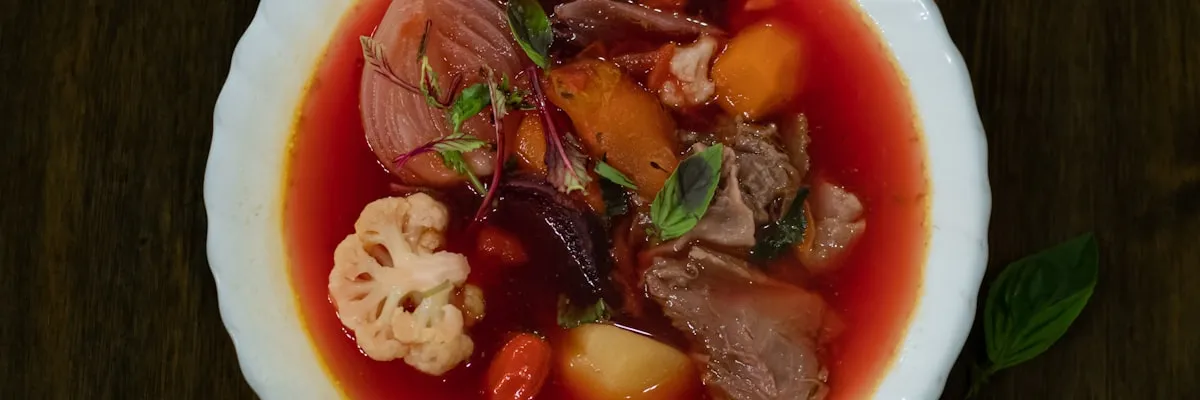
Ukrainian cuisine is among the richest and most distinctive of all Slavic culinary traditions. Its foundation is the Ukrainian black earth — chernozem — one of the most fertile soils on the planet, which has fed the region with grain, vegetables, and root crops for millennia. In 2022, UNESCO added the culture of borscht cooking to its list of Intangible Cultural Heritage in Need of Urgent Safeguarding, recognising it not merely as a dish but as a living symbol of national identity.
The Ukrainian table is built around beetroot, potato, cabbage, mushrooms, legumes, and aromatic herbs — dill and garlic above all. The key fats are salo (cured pork fatback) and sunflower oil, and sour cream appears almost everywhere: in borscht, with varenyky, spooned over deruny. Technically, the cuisine revolves around the traditional clay oven (піч) and its methods: slow braising, curing, and fermenting. Sauerkraut, brined apples, salted mushrooms — these preserves did not only extend the harvest; they shaped the characteristic sour undertone that runs through so many Ukrainian dishes.
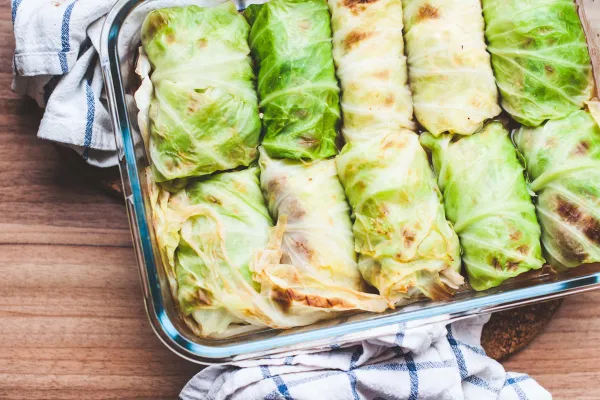
The canon of Ukrainian dishes spans the full range from everyday to ceremonial. Borscht comes in red (beetroot and meat), green (sorrel, made in spring), and cold — a chilled summer soup. Varenyky are folded dumplings filled with potato and onion, farmer's cheese, sour cherries, or cabbage — served hot with sour cream. Salo — salt-cured, smoked, rubbed with garlic — is a culture unto itself, with its own rituals of storing and slicing. Holubtsi are cabbage leaves stuffed with rice and meat, braised in tomato sauce until tender. Deruny are potato pancakes fried to a crisp golden crust. Pampushky — soft yeast rolls brushed with garlic butter — are the traditional companion to a bowl of borscht. In western Ukraine, banosh is a Hutsul polenta cooked in sour cream and topped with bryndza cheese. Among drinks, uzvar — a compote of dried fruits — appears on weekday tables and Christmas Eve alike.
The Ukrainian table is, above all, about generosity. On Holy Evening (Christmas Eve), exactly twelve meatless dishes are set out — one for each apostle: kutia (wheat berry pudding), uzvar, holubtsi, fish, mushroom soup. Bread and salt — greeting a guest with a loaf on an embroidered cloth — remains a living tradition. Regional differences run deep: Galician cuisine in the west carries Austro-Hungarian influences (strudels, pâtés); Poltava region is known for varenyky and halushky (soft dumplings); Odesa brings fish, capers, and a Mediterranean sensibility to the table.
The Ukrainian diaspora in Georgia is small, but a shared post-Soviet memory makes many of these dishes feel familiar to Georgian diners. Borscht and varenyky have long been part of the common culinary landscape. In Tbilisi today, Ukrainian cuisine is not an exotic novelty — it is something close, almost like home cooking.