Uzbek Cuisine
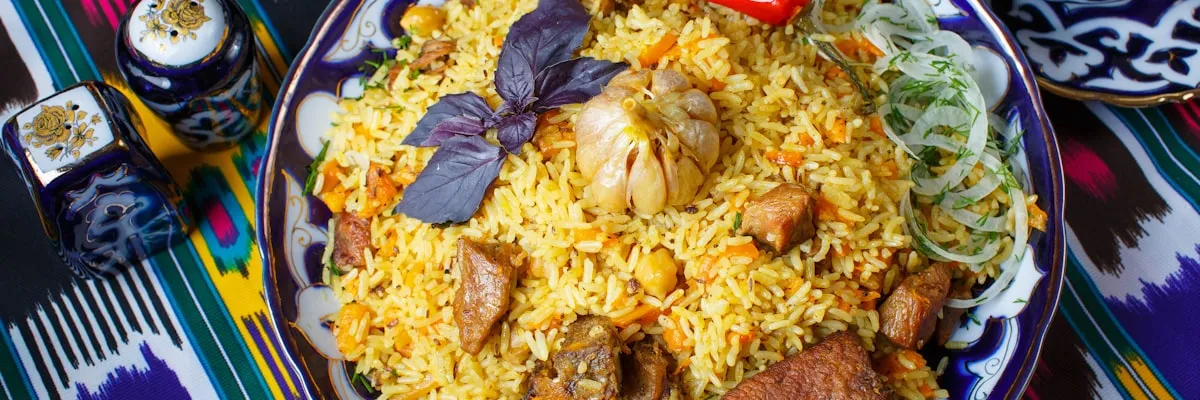
Uzbekistan sits at the heart of the ancient Silk Road, and its cuisine reflects this position with remarkable precision: Iranian rice culture, Turkic traditions of lamb and the cauldron, and Chinese noodle-making techniques all converged here over centuries of trade and movement. The result is one of Central Asia's most coherent and distinctive culinary traditions — one whose centrepiece, plov, was inscribed on the UNESCO Intangible Cultural Heritage list in 2016. In Uzbekistan, plov is not a recipe but an institution: it is made for weddings, funerals, Friday mornings, and any gathering that matters. The craftsman who presides over the cauldron carries a specific title — oshpaz, master of the pot.
The foundations of Uzbek cooking rest on a few essential ingredients. Lamb is the preferred meat, often cooked together with tail fat (kurdjuk), which gives dishes richness and depth without sharpness. Devzira rice — reddish, firm, coated with natural starch — absorbs the zirvak (the base of fried meat, onion, and carrot) without collapsing into mush. Yellow carrot, cumin, barberries, and garlic provide the invariable aromatic frame. The essential tool is the kazan, a thick-walled cast-iron or steel cauldron set over an open fire. Alongside it stands the tandoor, a clay oven in which samsa pastries and flatbread-patyr are baked until blistered and fragrant.
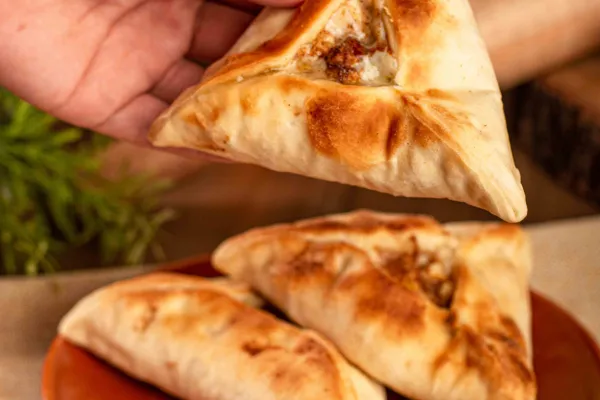
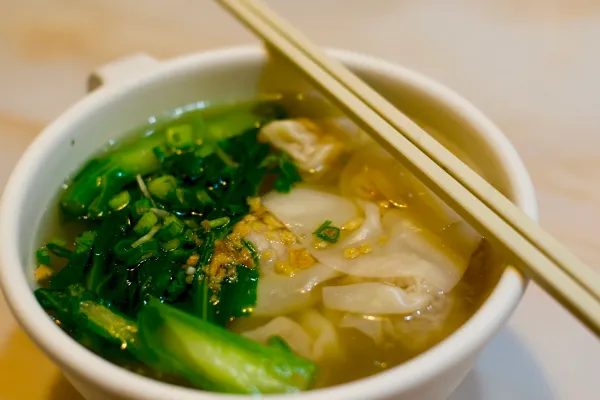
Beyond plov, the Uzbek table offers a rich cast of signature dishes. Samsa — flaky pastry filled with minced lamb and onion, baked against the walls of a tandoor — is sold at every market and eaten hot, standing at the oven. Shurpa is a clear, fortifying lamb broth with large-cut vegetables, the first thing placed before a returning traveller. Lagman — hand-pulled noodles in a thick meat and vegetable gravy — is a living reminder of Uzbekistan's proximity to China. Manti, steamed dumplings filled with lamb and pumpkin, are brought out on a wooden platter and eaten with the hands. Naryn — boiled meat with thin noodles in a strong broth — is a herdsman's winter dish. The meal ends with halva, chak-chak, or a wedge of ripe melon, which Uzbeks consider the only fitting conclusion to a proper spread.
Eating in Uzbekistan is a collective and ceremonial act. The oshkhana (teahouse, chaikhana) — shaded by a mulberry tree, furnished with low platforms — is where men gather not only to eat but to conduct business, exchange news, and sit together in comfortable silence. Cooking plov for a crowd has always been a male task: open fire, heavy cauldron, loud conversation. The dastarkhan — a cloth or low table laden with food — is laid before a guest as an act of respect. Tea is served in a handled-less piala bowl, in small sips, and replenished continuously; an empty bowl signals that the guest is ready to leave.
In Tbilisi, Uzbek cuisine arrived through Soviet-era trade and student connections and has maintained a quiet presence ever since. The shared instinct for spiced meat from a cauldron and bread from a clay oven resonates immediately with Georgian sensibilities: both tables are built on generosity, fire, and a deep regard for the guest.