Vietnamese Cuisine
Vietnamese cuisine is governed by a philosophy of five elements: five flavors, five colors, five methods of preparation — all held in balance within a single dish. This tradition developed over millennia, shaped by Chinese influence in the north, Indian spice routes in the south, and, between the 19th and 20th centuries, French colonial presence that left marks just as deep. The French baguette became the Vietnamese bánh mì — a sandwich layered with pickled vegetables, fresh mint, and chili that stands as one of the most compelling examples of culinary synthesis in modern food. Through all these layers of influence, Vietnamese cooking held fast to its defining instinct: lightness, freshness, and the least possible interference with the natural flavor of each ingredient.
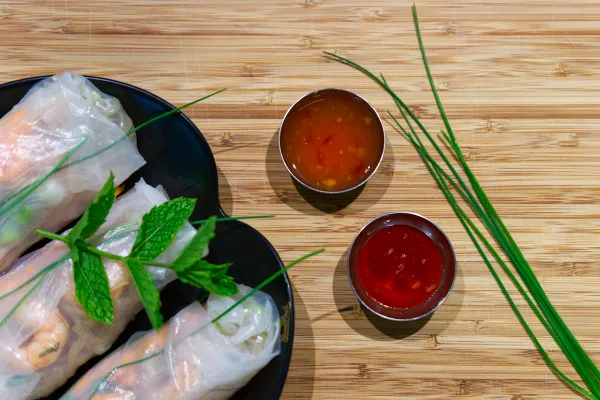
The spine of Vietnamese taste is nước mắm — fish sauce fermented from anchovies that replaces salt and gives dishes their characteristic depth of umami. Around it assembles a full ensemble: rice noodles in dozens of shapes and thicknesses, fresh herbs — mint, Vietnamese basil, cilantro — lemongrass, lime, chili, and bean sprouts. The broth for pho simmers on beef bones for six to eight hours with star anise, cloves, and cinnamon; it must be clear and deeply resonant at once. Fresh spring rolls called gỏi cuốn are wrapped in rice paper without any heat applied at all — that restraint is the point. The Vietnamese kitchen trusts its ingredients to speak for themselves.
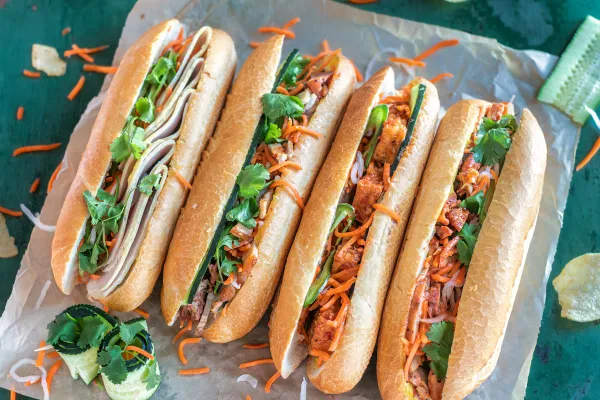
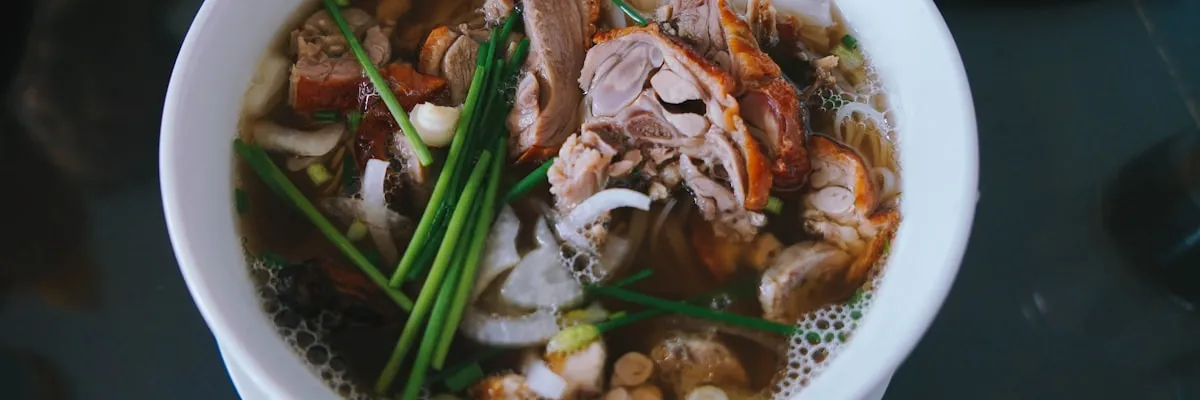
The canon of iconic dishes is wide and clear. Pho, the rice noodle soup with beef that emerged in northern Vietnam in the early 20th century, became the country's culinary signature. Bánh mì — a crisp baguette filled with pâté, grilled meat, pickled carrot and daikon, fresh chili, and cilantro — is street food elevated to an art form. Bún chả, grilled pork patties in a sweet-sour dipping broth served alongside rice noodles and herbs, is Hanoi's beloved lunchtime ritual. Bánh xèo, a crispy turmeric-yellow rice flour crepe stuffed with pork, shrimp, and bean sprouts, gets wrapped in lettuce leaves right at the table before eating. Cơm tấm, or broken rice — made from fractured grains once considered food for the poor — is now a point of pride on Saigon's street tables. And then there is cà phê sữa đá: iced coffee dripped slowly through a Vietnamese phin filter directly into a glass of sweetened condensed milk, a drink that defines the Vietnamese morning.
In Vietnam, eating is inseparable from the street. Low plastic stools, aluminum bowls, charcoal grills burning on the pavement — these are not a casual format but a centuries-old tradition. During Tết, the Vietnamese New Year, families gather to make bánh chưng — square rice cakes packed with pork and mung beans and wrapped in banana leaves, cooked through the night. The making matters as much as the eating. The country's cuisine shifts substantially from north to south: Hanoi favors restraint and precision, Hue carries the complex spice of its former imperial court, and Saigon embraces the vivid, sweet unpredictability of the open-air market.
In Tbilisi, Vietnamese food occupies a modest but steady corner of the city's culinary map. For those looking for something light and herb-forward after the richness of Georgian feasting, pho and fresh rolls offer a different kind of satisfaction.